
Honda Accord owners can access comprehensive repair guides and owner’s manuals online, including a 420-page PDF for the 2008 model year, available for download.
Techinfo.honda.com provides official Honda resources, offering both owner’s and service manuals spanning from 1990 to 2010, in PDF format;
Accessing these manuals ensures proper vehicle maintenance, troubleshooting, and understanding of all features within the 2008 Honda Accord.
Overview of the 2008 Honda Accord
The 2008 Honda Accord represents a significant iteration in Honda’s long-standing commitment to reliability and driver satisfaction. Available as both a sedan and a coupe, this model year featured both a 2.4-liter inline-4 and a more powerful 3.5-liter V6 engine option.
Styling was refined, offering a more contemporary aesthetic compared to previous generations. Inside, the Accord prioritized comfort and functionality, providing ample space for passengers and cargo.
Key features included available leather upholstery, a sunroof, and an upgraded audio system. Safety was also a priority, with standard ABS and optional Vehicle Stability Assist (VSA). Understanding the specifics of your 2008 Accord, through resources like the owner’s manual, is crucial for optimal performance and longevity.
Importance of the Owner’s Manual
The owner’s manual for your 2008 Honda Accord is an invaluable resource, serving as a comprehensive guide to your vehicle’s operation and maintenance. It details everything from basic functions like adjusting seats and mirrors to more complex systems like the anti-lock braking system (ABS) and Vehicle Stability Assist (VSA).
Accessing a downloadable PDF version, as found on Techinfo.honda.com, ensures you always have this vital information at your fingertips.
Properly understanding the manual’s guidance can prevent costly repairs, maximize fuel efficiency, and ensure the safety of you and your passengers. It’s a key component in responsible vehicle ownership and maintaining the longevity of your Honda Accord.
Where to Find a 2008 Honda Accord Manual
Locating a manual for your 2008 Honda Accord is readily achievable through several online resources. Techinfo.honda.com is the official source, offering both owner’s manuals and detailed service manuals in PDF format, covering models from 1990 to 2010.
Specifically, a 420-page PDF manual for the 2008 Accord is available for download, often requiring a password like “avtoproblem-net.ru” for unzipping.
Additionally, online forums and communities dedicated to Honda vehicles frequently share links and resources for accessing these manuals, ensuring convenient access to vital information for owners and enthusiasts alike.

Understanding Your Vehicle
Knowing your 2008 Honda Accord involves identifying the VIN, interpreting dashboard symbols, mastering key system operation, and adhering to maintenance schedules.
Vehicle Identification Number (VIN) Location
Locating the Vehicle Identification Number (VIN) on your 2008 Honda Accord is crucial for various reasons, including vehicle history reports, warranty claims, and insurance purposes. The primary location for the VIN is typically found on the driver’s side dashboard, visible through the windshield.
Specifically, look for a rectangular label affixed to the dashboard on the driver’s side, where it meets the windshield. The VIN is etched or printed onto this label. Additionally, the VIN can often be found on the driver’s side doorjamb, on the vehicle’s title, and registration documents. Ensuring you have access to your vehicle’s VIN is essential for accurate identification and service records.
Dashboard Symbols and Indicators

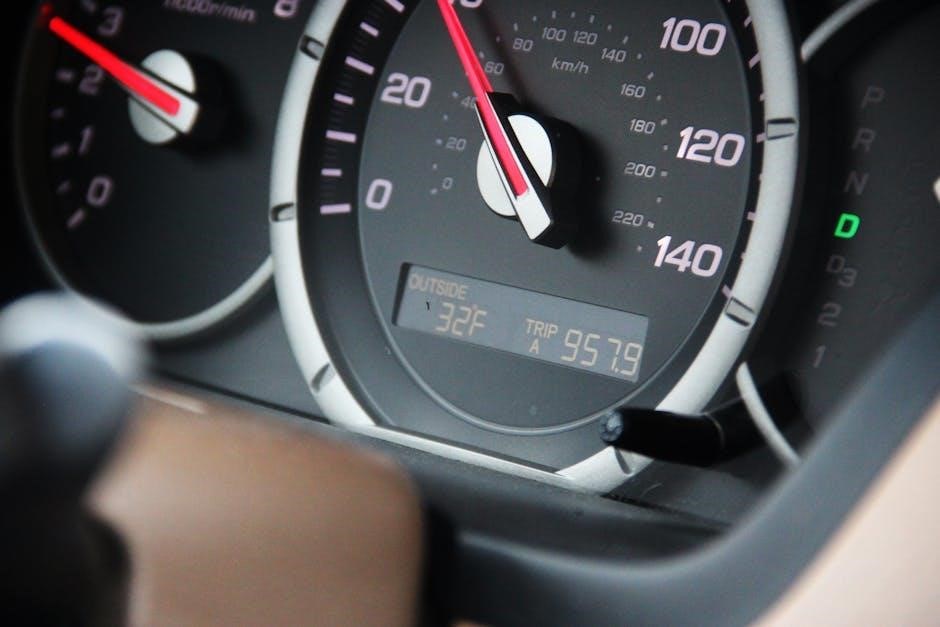
Understanding the dashboard symbols and indicators in your 2008 Honda Accord is vital for safe and informed driving. The owner’s manual provides a detailed explanation of each symbol, categorized by severity – warning lights, indicator lights, and malfunction indicator lamps.
Warning lights, typically red, signify critical issues requiring immediate attention, such as low oil pressure or engine overheating. Indicator lights, often green or amber, communicate the status of vehicle systems like headlights or turn signals. Familiarize yourself with these symbols to promptly address any potential problems and maintain optimal vehicle performance. Ignoring dashboard warnings can lead to more significant repairs.
Key System and Operation
The 2008 Honda Accord’s key system incorporates both mechanical and potentially immobilizer features for security. Your owner’s manual details proper key usage, including unlocking doors, igniting the engine, and operating remote functions if equipped.
Understanding the keyless entry system, if present, is crucial. The manual explains programming additional keys and troubleshooting remote operation issues. It also covers precautions to prevent accidental activation of the alarm or locking yourself out. Maintaining spare keys and understanding the system’s functionalities ensures convenient and secure access to your vehicle, preventing potential disruptions.
Understanding Maintenance Schedules
The 2008 Honda Accord manual outlines a detailed maintenance schedule crucial for preserving vehicle reliability and performance. This schedule differentiates between “normal” and “severe” driving conditions, impacting service intervals.
Regular maintenance, as detailed in the manual, includes oil changes, filter replacements (air, fuel, cabin), tire rotations, and fluid level checks. Adhering to these schedules prevents premature wear and tear, ensuring optimal engine function and safety. Honda recommends specific intervals for inspecting components like brakes, belts, and hoses. Following the manual’s guidance maintains your vehicle’s warranty and resale value.

Maintenance Procedures
The 2008 Honda Accord manual details essential procedures like oil changes, tire care, brake servicing, and fluid level checks for optimal vehicle upkeep.
Oil Change Procedures
The 2008 Honda Accord manual provides detailed instructions for performing oil changes, a crucial maintenance task. Begin by warming the engine, then safely lift the vehicle and locate the oil drain plug.
Position a drain pan, remove the plug, and allow all oil to drain completely. Replace the drain plug with a new crush washer, ensuring it’s tightened to the specified torque.
Next, remove the oil filter using an appropriate wrench, lubricating the new filter’s gasket with fresh oil before installation. Fill the engine with the recommended oil type and quantity, as outlined in the manual.
Finally, check the oil level with the dipstick and start the engine briefly to verify no leaks. Properly dispose of the used oil and filter.
Tire Rotation and Replacement
The 2008 Honda Accord manual emphasizes the importance of regular tire rotation for even wear and extended tire life. The recommended rotation pattern is typically front to back on the same side of the vehicle.
Before rotation, ensure tires are properly inflated to the pressure listed on the driver’s side doorjamb. When replacing tires, always use the correct size and type specified in the manual.
Proper torque is crucial when tightening lug nuts; consult the manual for the exact specification. After rotation or replacement, check tire pressure again and perform a wheel balance to ensure smooth driving.
Inspect tires regularly for damage and wear, and replace them when tread depth reaches the legal limit.
Brake Inspection and Replacement
The 2008 Honda Accord manual details crucial brake system maintenance. Regular inspection of brake pads, rotors, and lines is vital for safety. The manual outlines how to visually assess pad thickness and rotor condition.
If pads are worn below the minimum thickness, replacement is necessary. Rotor resurfacing or replacement may also be required depending on wear; Brake fluid levels should be checked and topped off as needed, using the specified DOT 3 brake fluid.
When replacing components, always follow the manual’s torque specifications for lug nuts and brake caliper bolts. Bleeding the brake lines after replacement is essential to remove air and ensure proper function.
Fluid Level Checks (Coolant, Brake Fluid, Power Steering Fluid)
The 2008 Honda Accord manual emphasizes regular fluid level checks for optimal performance. Coolant levels should be inspected when the engine is cold, ensuring it’s between the minimum and maximum marks on the reservoir. Use Honda Long Life Antifreeze/Coolant.
Brake fluid levels are also critical; check the reservoir and add DOT 3 brake fluid if low. Low levels may indicate a leak. Power steering fluid should be checked with the engine off, maintaining the level between the “MIN” and “MAX” marks.
Always use the specified fluid types as outlined in the manual to avoid damaging the system. Consistent monitoring prevents potential issues.

Mechanical Components
The 2008 Honda Accord manual details engine specs for both 2.4L and 3.5L engines, alongside transmission, suspension, and steering system overviews.
Engine Specifications (2.4L & 3.5L)
The 2008 Honda Accord offered two engine options, each with distinct specifications detailed within the vehicle’s manual; The 2.4L inline-4 engine produced approximately 177 horsepower and 161 lb-ft of torque, providing a balance of fuel efficiency and performance;
Alternatively, the 3.5L V6 engine delivered a more robust 244 horsepower and 232 lb-ft of torque, catering to drivers seeking enhanced acceleration and power.
The manual provides comprehensive information regarding compression ratios, valve configurations, and other critical engine parameters for both powertrains, aiding in proper maintenance and repair procedures. Understanding these specifications is crucial for diagnosing issues and ensuring optimal engine operation.
Transmission Information (Automatic & Manual)
The 2008 Honda Accord was available with either a five-speed manual or a five-speed automatic transmission, each designed to complement the available engine options. The owner’s manual details the operational characteristics of both systems, including shift patterns and recommended fluid types.
For the automatic transmission, the manual outlines features like Grade Logic Control, which optimizes gear selection based on road conditions and vehicle load.
The manual transmission section covers proper shifting techniques and clutch adjustment procedures. Detailed diagrams and troubleshooting guides are included to assist with identifying and resolving transmission-related issues, ensuring smooth and reliable performance for both transmission types.
Suspension System Overview
The 2008 Honda Accord features a sophisticated suspension system designed for a balance of ride comfort and handling precision. The front suspension utilizes MacPherson struts, while the rear incorporates an independent multi-link setup.
The owner’s manual provides a general overview of these components, explaining their function in absorbing road impacts and maintaining vehicle stability. It details the importance of regular inspection for wear and damage to components like shocks, struts, and bushings.
While not a detailed repair guide, the manual offers guidance on identifying potential suspension issues and emphasizes the need for professional servicing when necessary to ensure optimal performance and safety.
Steering System Details
The 2008 Honda Accord employs a power-assisted steering system, enhancing maneuverability and reducing driver effort. The manual outlines the system’s basic operation, noting the use of hydraulic power assistance for smooth and responsive steering control.
It details the importance of checking the power steering fluid level regularly to maintain optimal performance and prevent damage to the pump. The manual also provides cautionary notes regarding potential noises or unusual steering behavior, advising drivers to seek professional inspection.
While not a comprehensive repair guide, the owner’s manual offers essential information for understanding the steering system’s function and identifying potential issues requiring professional attention.

Electrical System
The 2008 Honda Accord manual details battery maintenance, fuse box locations with diagrams, lighting troubleshooting, and audio system operation for vehicle electrical components.
Battery Maintenance and Replacement
The 2008 Honda Accord manual provides crucial guidance on maintaining optimal battery performance and safely replacing the battery when necessary. Regular inspection of the battery terminals for corrosion is recommended, alongside cleaning with a baking soda solution.
Proper jump-starting procedures are outlined to avoid damage to the electrical system. The manual details the correct battery type and specifications for your specific Accord model.
Step-by-step instructions are included for battery removal and installation, emphasizing the importance of disconnecting the negative terminal first to prevent short circuits. Always consult the manual for torque specifications when tightening battery terminals.
Fuse Box Locations and Diagrams
The 2008 Honda Accord manual meticulously details the locations of all fuse boxes within the vehicle – typically under the dashboard and within the engine compartment. Clear diagrams illustrate the layout of each fuse box, identifying the function of every fuse.
Understanding these diagrams is vital for troubleshooting electrical issues. The manual specifies the amperage rating for each fuse, preventing the use of incorrect replacements.
It emphasizes the importance of using the correct fuse type and never bridging a blown fuse. Detailed instructions guide owners through identifying and replacing faulty fuses, ensuring safe and effective electrical system maintenance.
Lighting System Troubleshooting
The 2008 Honda Accord manual provides a systematic approach to diagnosing lighting system problems. It begins with basic checks – verifying bulb functionality and inspecting wiring connections for corrosion or damage.
Detailed troubleshooting guides address common issues like headlight failure, turn signal malfunctions, and interior light problems. The manual correlates specific symptoms with potential causes, guiding owners towards effective solutions.
Fuse locations relevant to the lighting system are clearly identified, alongside instructions for testing and replacing them. It also emphasizes safety precautions when working with electrical components, advising disconnection of the battery when necessary.
Audio System Operation
The 2008 Honda Accord manual details the operation of the vehicle’s audio system, covering radio tuning, CD player functionality, and auxiliary input usage. It explains how to navigate the system’s menus and adjust settings like volume, balance, and fader.
The manual also provides instructions on utilizing features such as preset station storage and seeking specific radio frequencies. Furthermore, it outlines the process for connecting external devices via the auxiliary port for audio playback.
Troubleshooting tips are included for common audio issues, like sound distortion or a lack of audio output. Owners can find guidance on resetting the system and identifying potential problems with speakers or connections.
Troubleshooting Common Issues
The 2008 Honda Accord manual assists in diagnosing problems like the Check Engine Light, transmission issues, brake malfunctions, and electrical system failures.
It offers guidance for identifying potential causes and suggests solutions for resolving these common vehicle concerns.
Addressing Check Engine Light
The 2008 Honda Accord manual provides essential guidance when the Check Engine Light illuminates. This light indicates a potential issue within the vehicle’s emission control system or engine. The manual doesn’t directly detail specific code diagnoses, but emphasizes the importance of understanding the system.
Owners are advised to consult a qualified technician for accurate code reading and interpretation using an OBD-II scanner. Common causes can range from a loose gas cap to more serious engine or catalytic converter problems. The manual stresses that ignoring the light can lead to more extensive and costly repairs, and potentially impact emissions compliance.
Regular maintenance, as outlined in the manual, can help prevent many issues triggering the Check Engine Light, ensuring optimal vehicle performance and longevity.
Dealing with Transmission Problems
The 2008 Honda Accord manual offers limited direct troubleshooting for transmission issues, but highlights the importance of proper fluid maintenance. The manual specifies checking the automatic transmission fluid (ATF) level regularly and adhering to the recommended fluid change intervals.
Symptoms like slipping gears, harsh shifting, or unusual noises warrant immediate attention from a qualified mechanic. The manual doesn’t provide DIY repair instructions for complex transmission work. It emphasizes that attempting repairs without proper knowledge can cause further damage.
Owners experiencing transmission problems should consult a Honda service professional for diagnosis and repair, ensuring the use of genuine Honda parts and fluids for optimal performance and reliability.
Resolving Brake Issues
The 2008 Honda Accord manual stresses the critical importance of regular brake system inspections. It details how to visually check brake pad thickness and rotor condition. The manual also outlines the proper procedure for checking brake fluid levels and identifying potential leaks within the system.
Symptoms like squealing noises, grinding sounds, or a spongy brake pedal indicate potential problems requiring immediate attention. The manual advises against attempting complex brake repairs without professional expertise, as improper work can compromise safety.
Owners facing brake issues should consult a certified mechanic for diagnosis and repair, ensuring the use of genuine Honda brake components for optimal stopping power and vehicle safety.
Handling Electrical System Malfunctions

The 2008 Honda Accord manual provides guidance on troubleshooting common electrical issues, starting with fuse box locations and detailed diagrams. It explains how to identify blown fuses and safely replace them with the correct amperage rating. The manual also covers basic lighting system troubleshooting, addressing issues like burnt-out bulbs and faulty switches.
For more complex malfunctions, such as audio system problems or warning light illumination, the manual recommends consulting a qualified technician. It cautions against attempting repairs without proper knowledge, as electrical systems can be hazardous.
Owners can find additional support and diagnostic information on Honda Techinfo, a resource for detailed repair procedures and technical service bulletins.

Safety Features
The 2008 Honda Accord manual details the airbag system, Anti-lock Braking System (ABS), and Vehicle Stability Assist (VSA) for optimal driver and passenger protection.
Airbag System Information
The 2008 Honda Accord manual provides crucial details regarding the vehicle’s airbag system, emphasizing its role as a supplemental restraint system designed to work with seatbelts, not replace them. Honda stresses the importance of always wearing seatbelts for maximum protection during a collision.
The manual outlines the locations of airbags – front, side, and side curtain – and explains conditions under which they deploy. It also details potential risks associated with airbag deployment, particularly for children, and reinforces the need to follow all safety precautions. Proper maintenance and understanding of the system, as described in the manual, are vital for its effective operation.
Furthermore, the manual warns against modifying the airbag system and advises seeking qualified Honda service for any related repairs or concerns.
Anti-lock Braking System (ABS)
The 2008 Honda Accord manual thoroughly explains the function of the Anti-lock Braking System (ABS), designed to prevent wheel lock-up during hard braking, allowing the driver to maintain steering control. Honda emphasizes that ABS does not reduce stopping distance, but enhances directional stability.
The manual details how the ABS indicator light on the dashboard functions, signaling system operation or potential malfunctions. It instructs drivers on how to recognize the pulsating sensation in the brake pedal during ABS activation and advises maintaining firm, continuous pressure.
Understanding the ABS system’s operation, as outlined in the manual, is crucial for safe driving. The manual also cautions against attempting self-repairs and recommends professional Honda service for any ABS-related issues.
Vehicle Stability Assist (VSA)
The 2008 Honda Accord manual details the Vehicle Stability Assist (VSA) system, a crucial safety feature designed to enhance stability during critical driving situations. VSA helps prevent oversteering and understeering by selectively applying braking force to individual wheels.
The manual explains that the VSA indicator light illuminates during system operation, indicating active stability control. It stresses that VSA is not a substitute for careful driving and does not eliminate all risk. Drivers should still exercise caution and adjust speed to road conditions.
Understanding the limitations of VSA, as described in the owner’s manual, is vital for safe operation. The manual advises against disabling the system unless specifically instructed by a Honda technician and recommends professional service for any VSA malfunctions.

Additional Resources
Honda Techinfo provides official service manuals, while online forums offer community support and troubleshooting advice for the 2008 Honda Accord.
Honda Techinfo Website
Honda Techinfo (techinfo.honda.com) serves as the official online source for detailed technical information regarding Honda vehicles, including the 2008 Honda Accord. This platform provides access to both owner’s manuals and comprehensive service manuals, offering a wealth of knowledge for owners and technicians alike.
Users can find resources ranging from basic maintenance procedures to in-depth repair guides. The website hosts manuals in PDF format, covering various model years, including a dedicated section for models from 1990 to 2010. Accessing these resources often requires registration, but it unlocks a valuable database of official Honda documentation. The 2008 Accord owner’s manual is directly available as a downloadable PDF.
Online Forums and Communities
Online forums and communities dedicated to Honda vehicles, particularly the 2008 Honda Accord, offer a collaborative space for owners to share knowledge, troubleshoot issues, and access supplemental information. These platforms often host discussions about repair procedures, maintenance schedules, and common problems specific to this model year.
While not official sources, these communities can provide valuable insights from experienced owners and enthusiasts. Members frequently share links to helpful resources, including downloadable manuals and diagrams. Participating in these forums allows owners to ask questions, receive advice, and contribute to a collective understanding of the 2008 Accord, supplementing the official documentation available elsewhere.